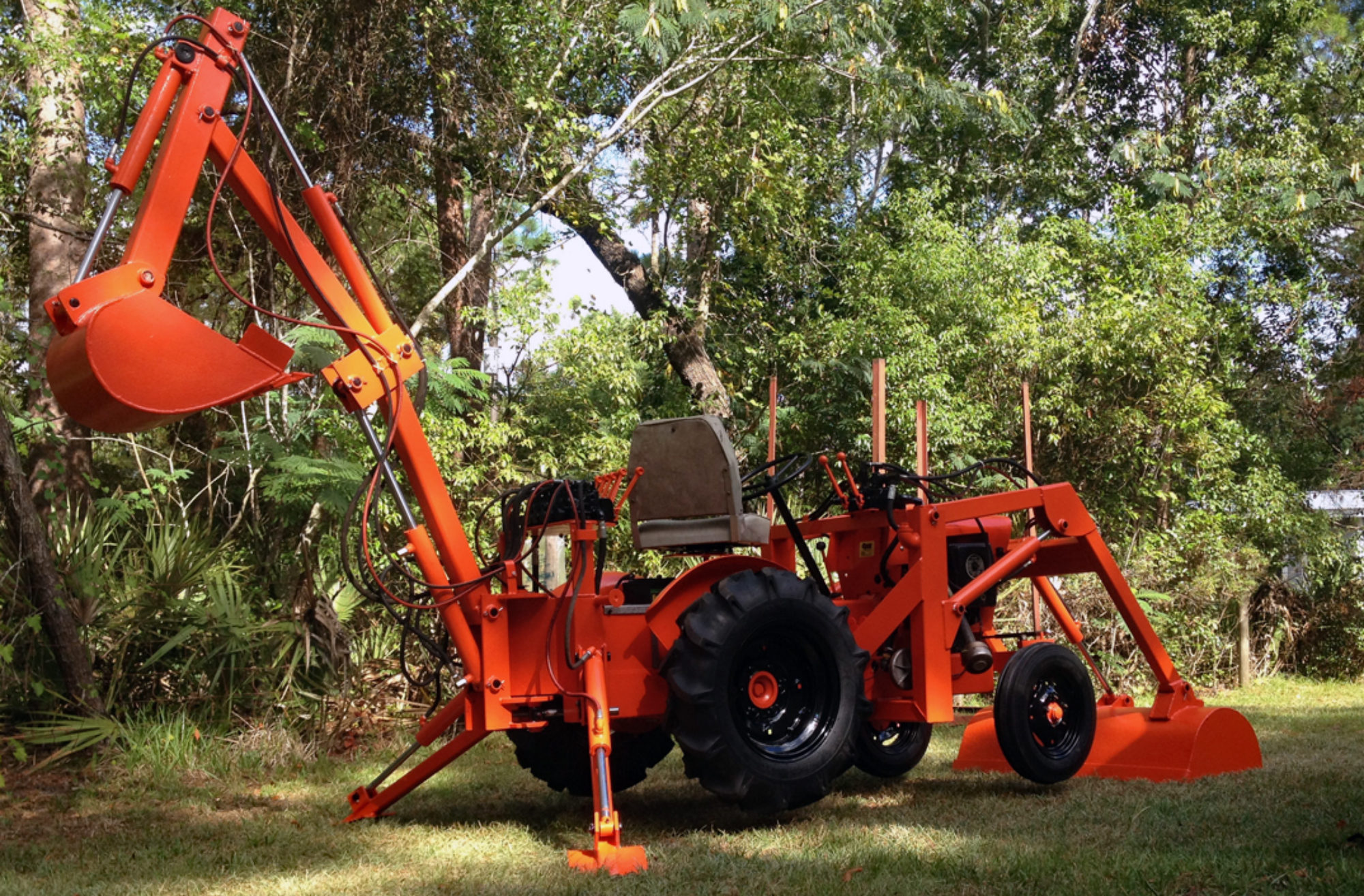
In part one of this series, I walked you through general teardown of the Borg-Warner T92 3-speed transmission used on Power King and Jim Dandy tractors (among others) as well as Crosley automobiles. In this installment we will replace the front and rear bearings on the input and output shafts.
For reference, here’s an IPL, or illustrated parts list.
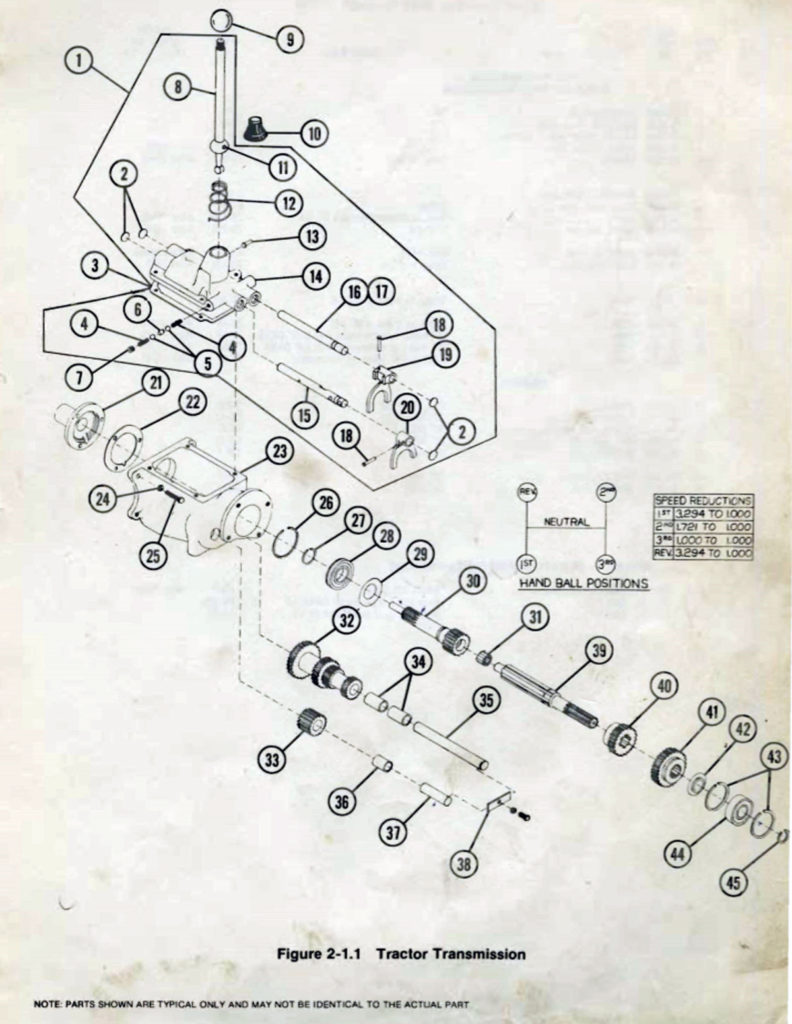
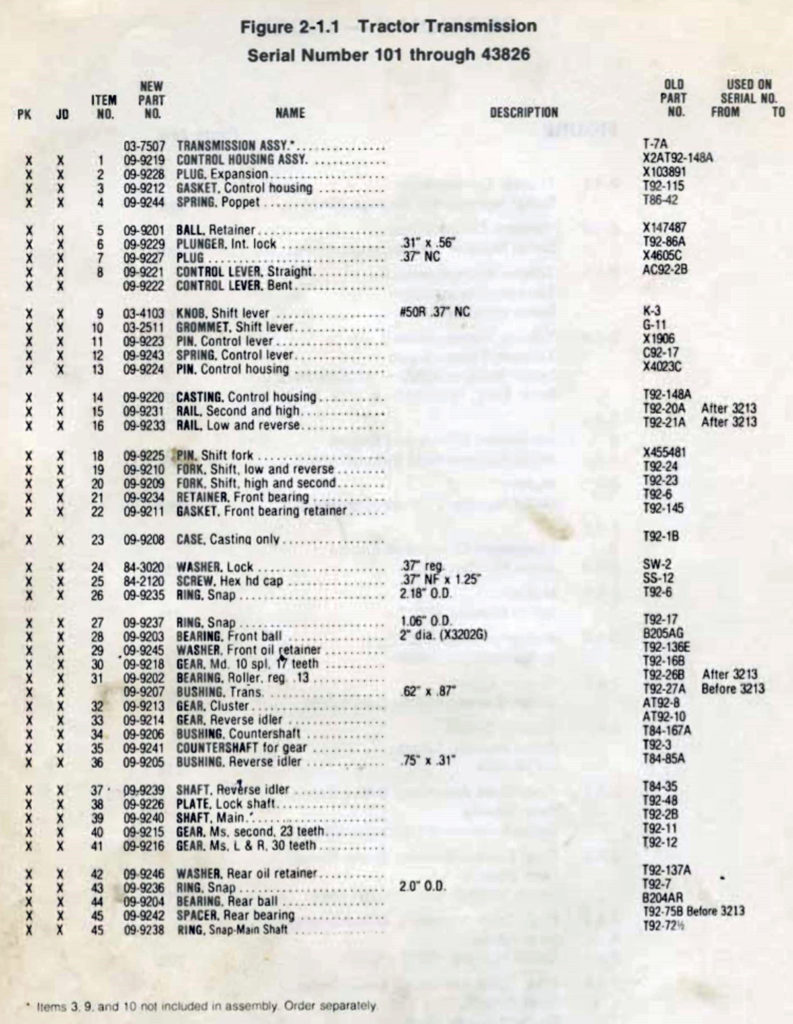
Let’s start with the input shaft, which is the front shaft. This is the bearing that gets the most wear. The photo below shows two input shafts; the one on the right has an open ball bearing, which is the original type. The shaft on the left has only the inner race of the bearing remaining, because the bearing failed and went to pieces inside the transmission.
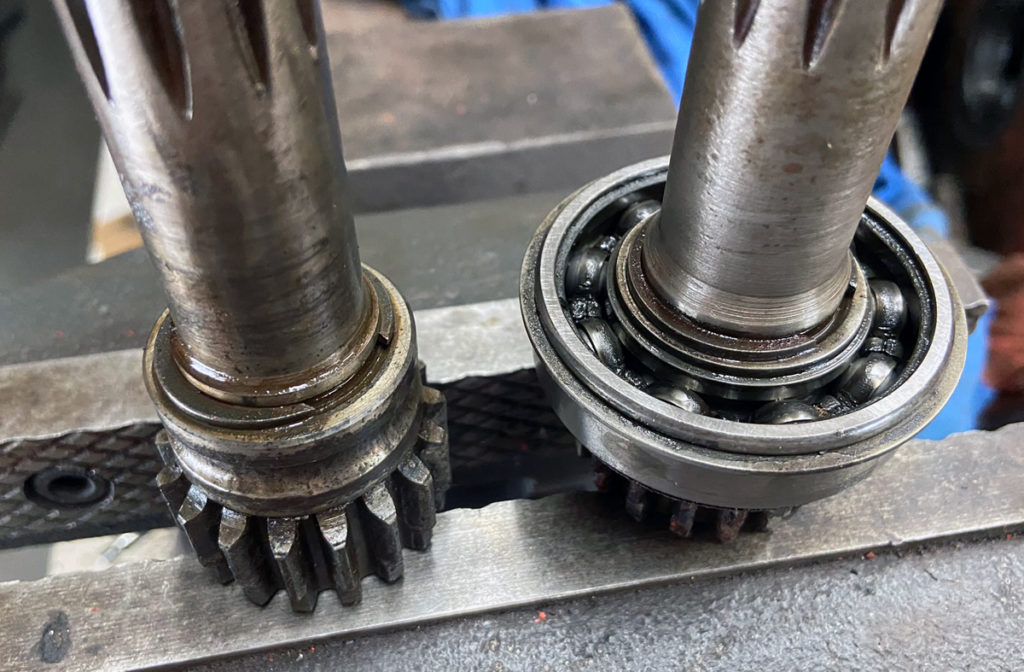
(Photo © Russ Chastain)
WARNING: Do not damage the snap ring around the outer race of the bearing! You will probably need to reuse it (more on that later in this article). And if you plan to use open bearings rather than sealed bearings, you will need to preserve the thin “oil slinger” washer if it’s still intact (more on that below).
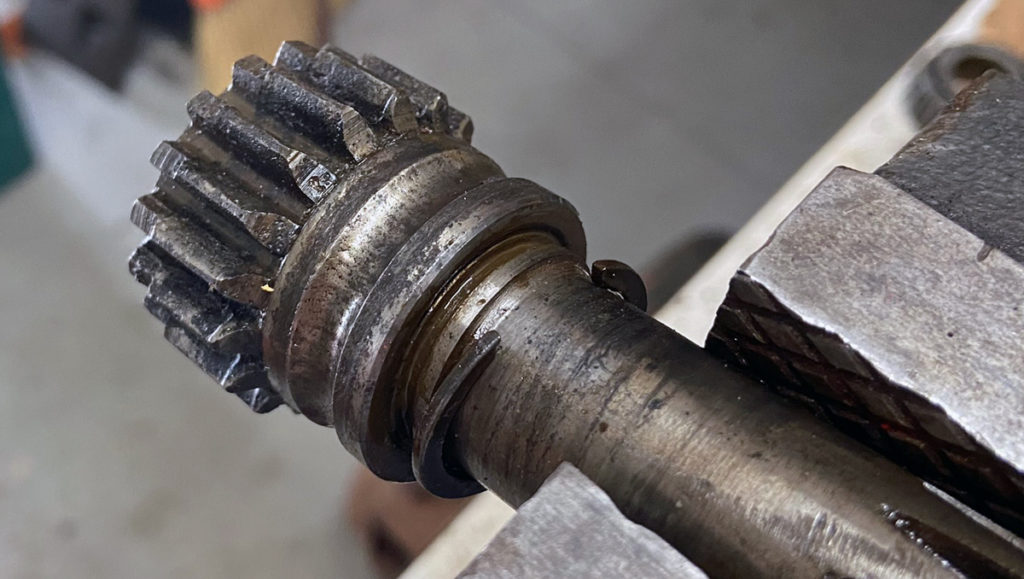
I’ll demonstrate using the worst of the two shafts. The procedure is the same when you’re removing the entire bearing. The first thing you do is remove the snap ring holding the bearing onto the shaft. Spread the ends and gently move it away from the bearing and out of its groove. WEAR EYE PROTECTION.

(Photo © Russ Chastain)
Getting it out of its groove is the hard part. Try not to bend or over-stretch it.
(Photo © Russ Chastain)
Once you have the snap ring out of its groove, slide it off of the shaft. Try to keep it “even” as you do this, so you don’t bend or otherwise distort it.

(Photo © Russ Chastain)
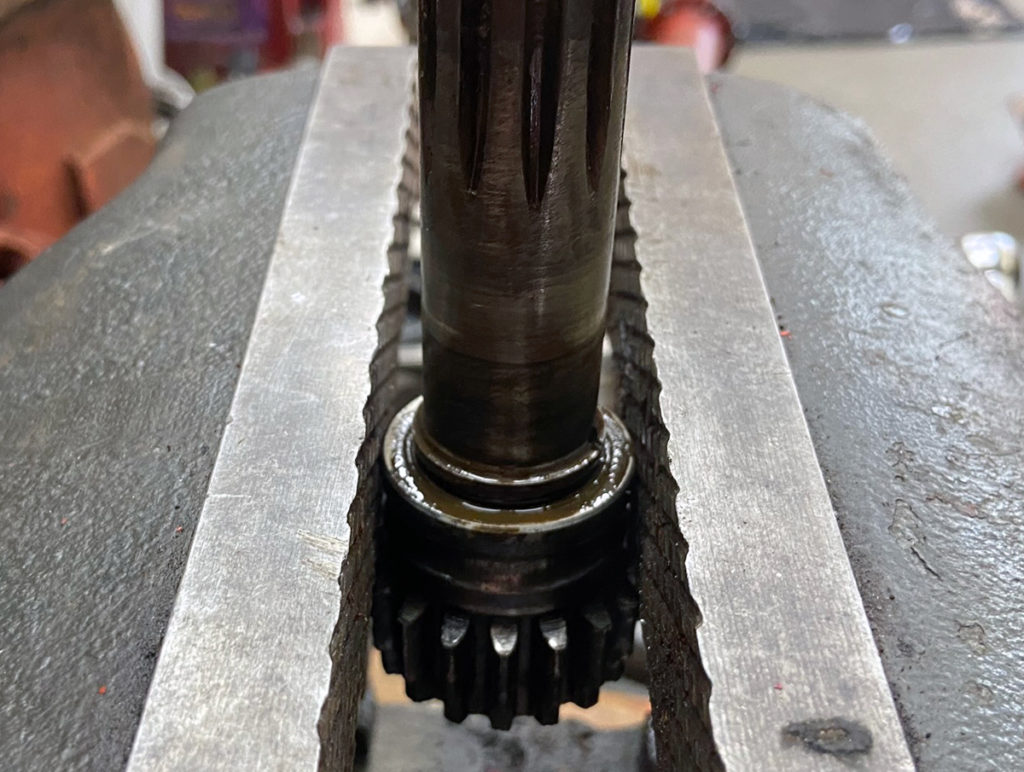
The inside of the bearing fits tightly on the shaft, so it will take some force to remove it. Normally, you can support the outer race of the bearing while you drive or press the shaft out of the bearing. If your bearing is not intact, or if it comes apart while you’re removing it from the shaft, you will need to secure the inner race somehow while you remove the shaft.
(Photo © Russ Chastain)
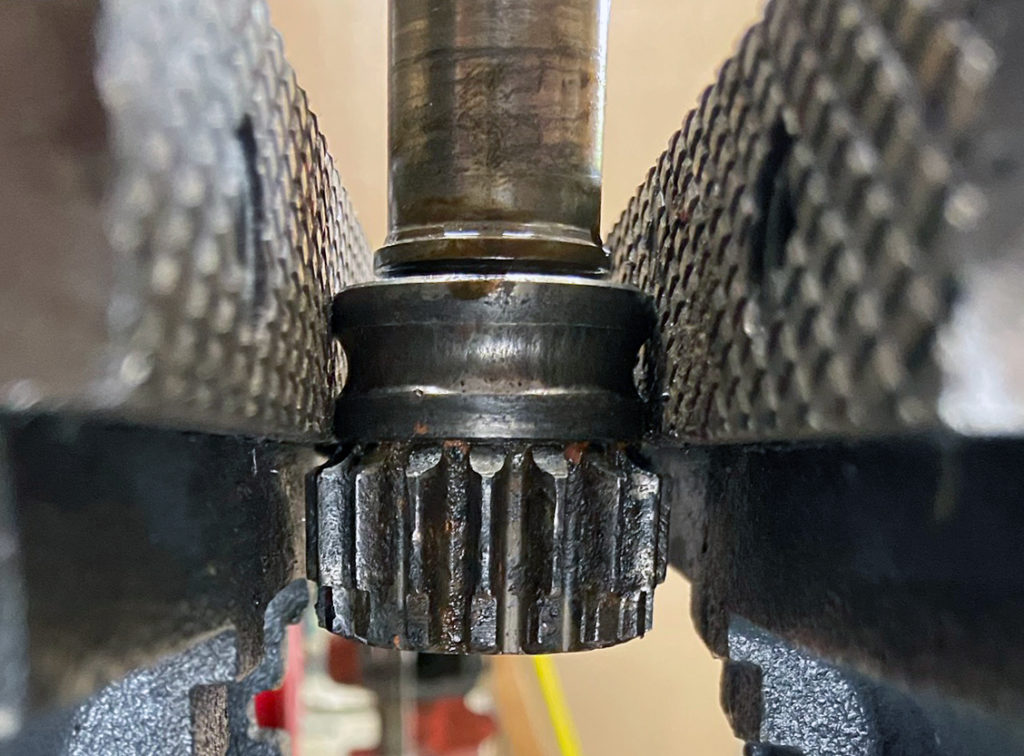
NEVER strike the shaft with a steel hammer! Shafts are expensive, and a steel hammer can damage it. Use a hammer of non-marring material such as brass, or use a piece of brass between the hammer and shaft to cushion the blows.
(Photo © Russ Chastain)
Be sure you don’t grab the gear teeth with your vise, or otherwise damage them.
If you are using a vise in this manner, pay attention to where the race is in the jaws. With each strike of the hammer, the race will probably slip down a little. You may need to reposition it in the vise a few times before the race comes off.

(Photo © Russ Chastain)
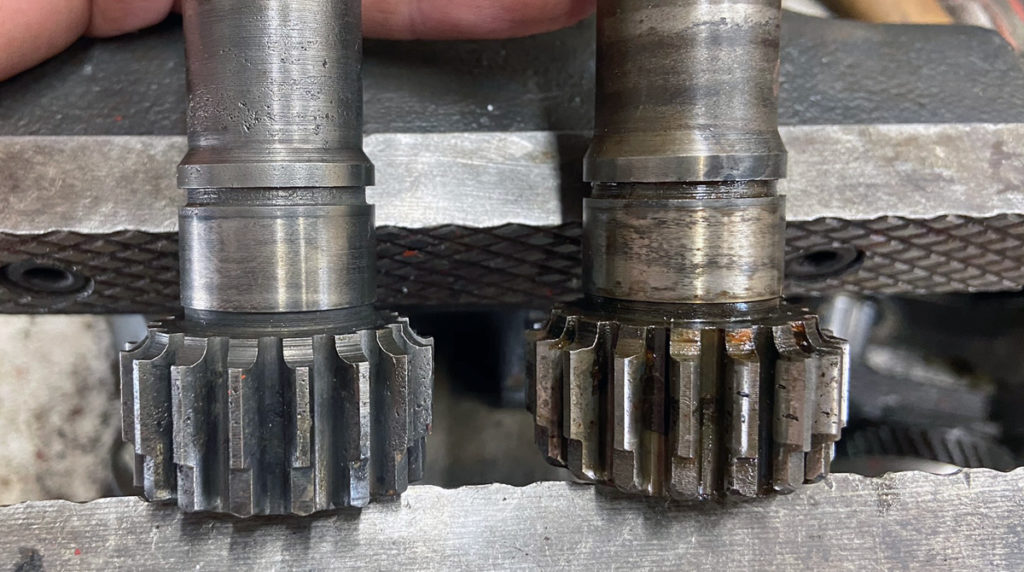
Once the bearing is off, your input shaft should look like this. I wish I could combine these shafts; one has better gear teeth, while the other is in better shape up front.
(Photo © Russ Chastain)
The new sealed front bearing part number is 6205 2RS NR, and you need to be sure to get one with the snap ring, because you’re going to need the snap ring groove. You can buy one by clicking here, if you like. (If you do, I might make a few pennies.)
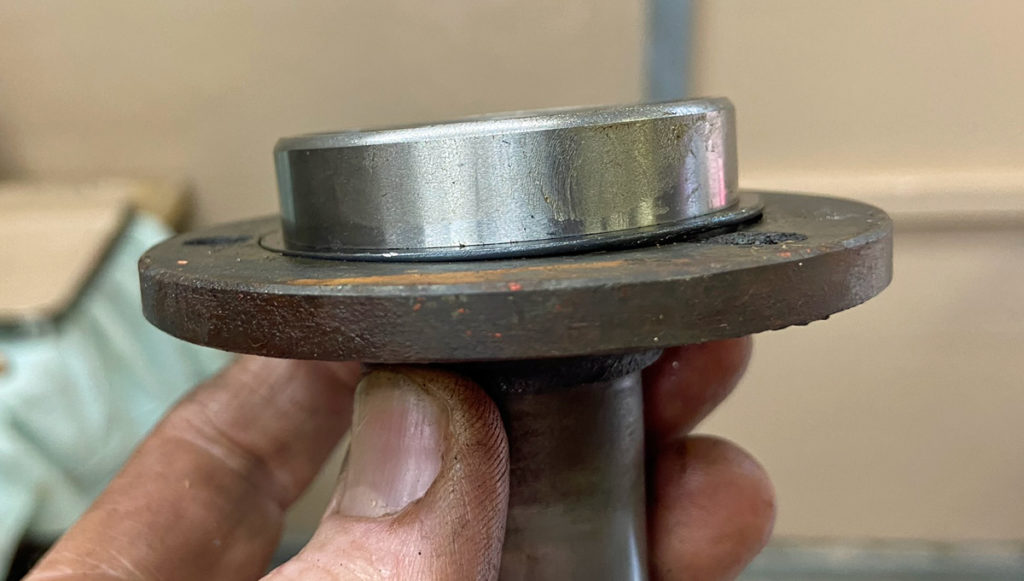
Chances are good that your new front bearing will have the wrong size snap ring. Thankfully, it’s easy to swap them out.

(Photo © Russ Chastain)
All of the new snap rings I’ve found on these bearings are too large to properly fit into the bearing retainer. The diameter is simply too great, and as you can see the new snap ring can’t fit correctly. So, just remove the snap ring from the new bearing and install the old snap ring on the new bearing.
This is probably the easiest snap ring procedure of the entire process. Enjoy!
(Photo © Russ Chastain)
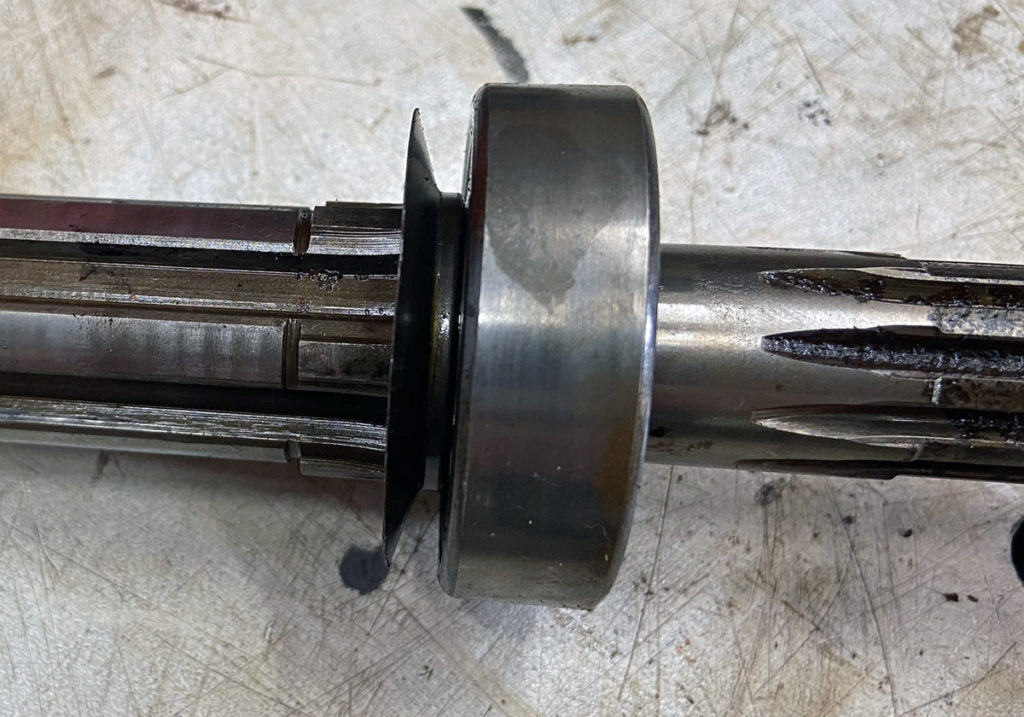
A note about “oil slingers:” Originally, this transmission had open bearings with sheet metal parts commonly known as slingers, which the IPL above calls “oil retainer washers.” These are often damaged and are not easily replaced — and are unnecessary if you use sealed bearings.
If you are going to use one of these, you’ll want to slip it onto the shaft BEFORE you install the bearing, and then take care not to damage it during installation.

(Photo © Russ Chastain)
To install the new front bearing, position it with the snap ring towards the front of the shaft and press or drive the input shaft into the bearing. Then reinstall the shaft snap ring which retains the bearing on the input shaft. When you’re done it should look like the one on the right in the pic below (if you used a sealed bearing, you won’t be able to see the balls inside).

(Photo © Russ Chastain)
The Rear Shaft
Now let’s work on the rear shaft, also known as the output shaft or the main shaft.
I’ve noticed two different types of rear shafts in T92 transmissions. One type has a spacer between the snap ring and the rear bearing. The pic below shows this type of shaft with and without the bearing installed.

(Photo © Russ Chastain)
Another type of shaft has no spacer, and the snap ring is placed right next to the bearing.

Both of these shafts take the same sort of bearing, and unlike the front bearing, it’s not directional (there’s no front or back).
The part number for a new rear sealed bearing is 6204 2RS, and you can buy one by clicking here. (If you do, I might make a few pennies.)
To remove the old bearing, the procedure is the same as for the front (input) shaft: Remove snap ring, then remove bearing (and slinger, if present).
(Photo © Russ Chastain)
Installation is even simpler than the front bearing because there’s no external snap ring to worry about. Install slinger (if using an unsealed bearing), then bearing, then spacer if applicable, then snap ring. Done!
Next, we will assemble the parts to make up a good T92 transmission; that’s part 3 of this T92 Transmission Overhaul series.