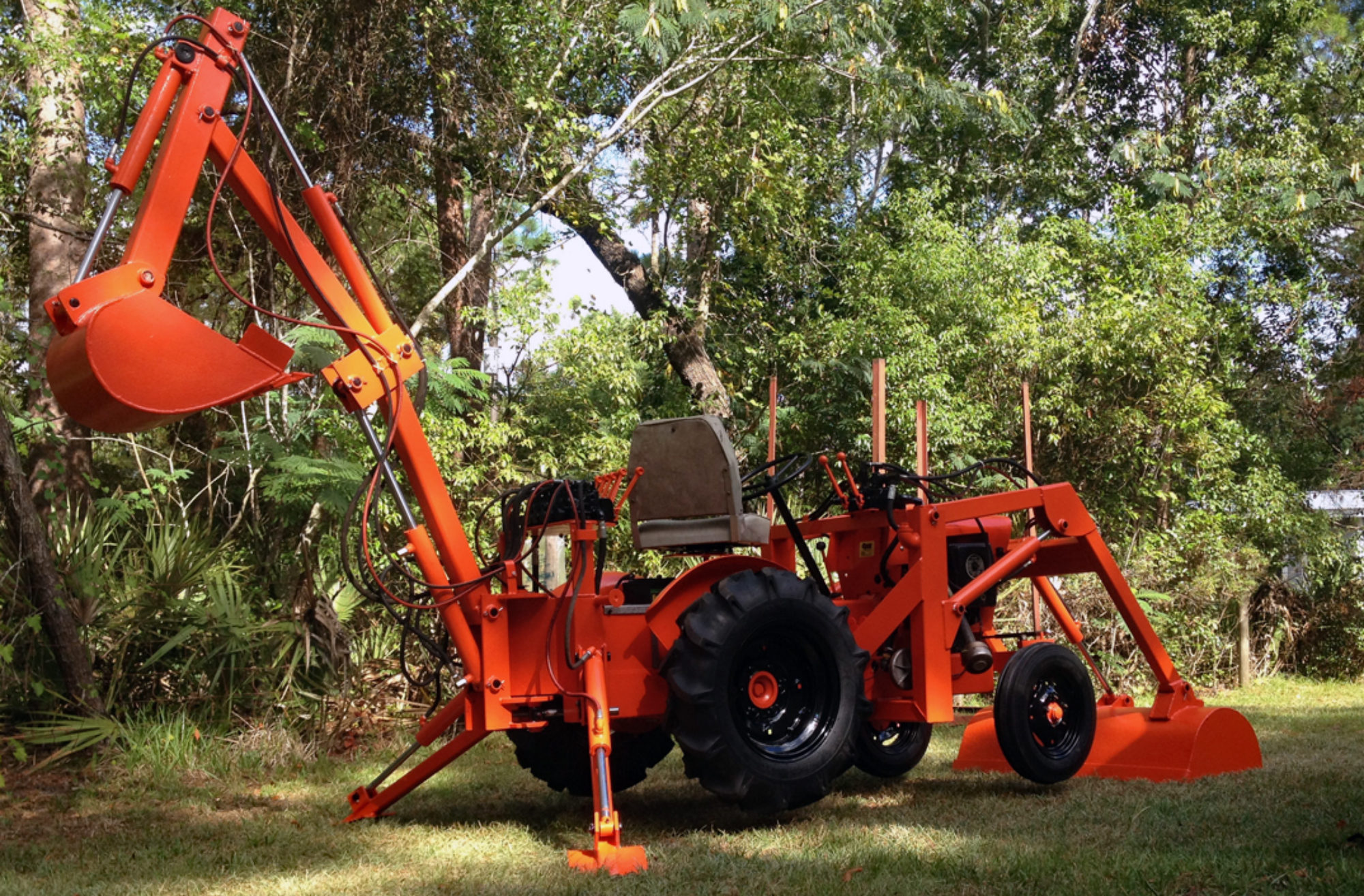
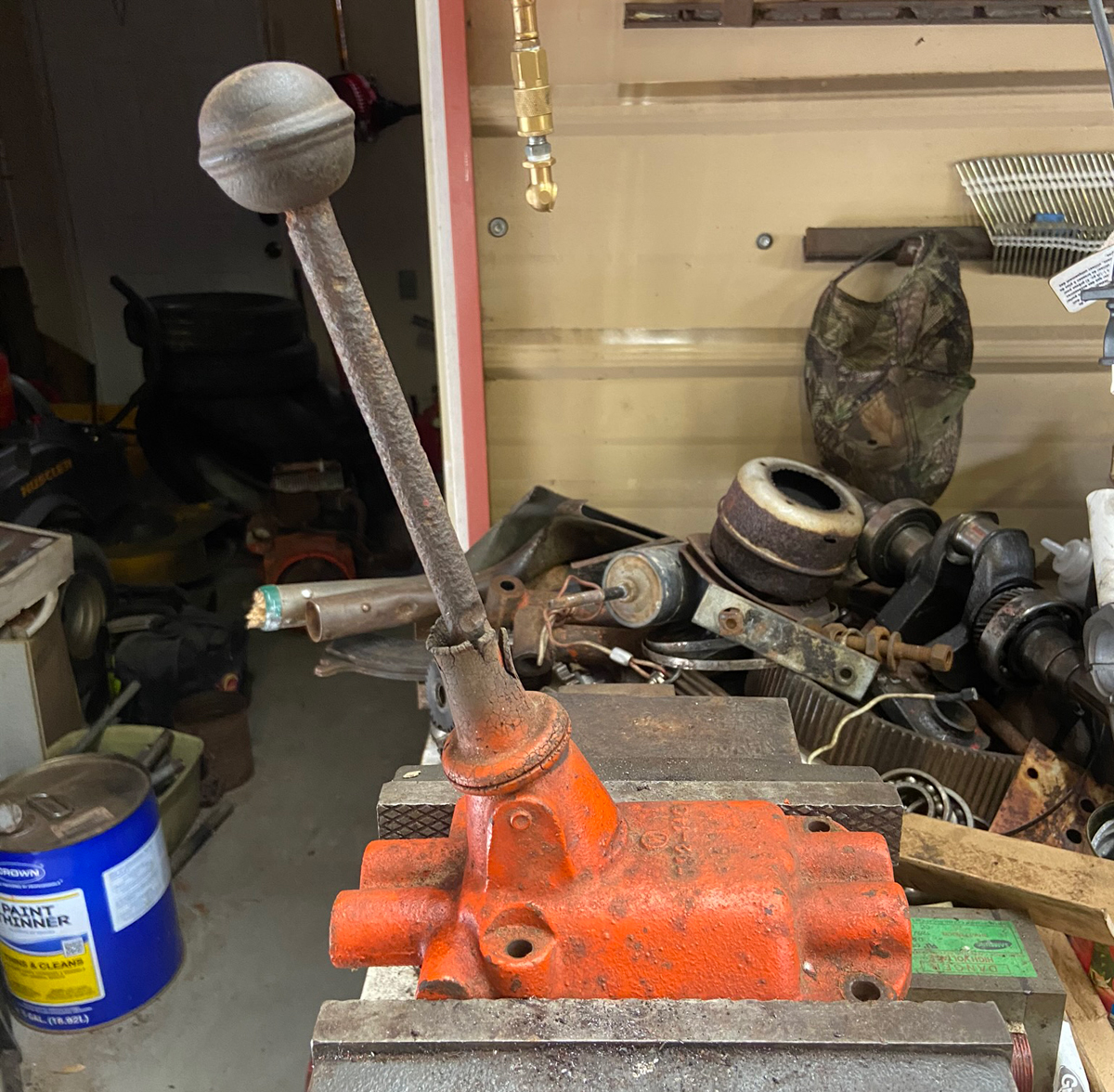
Shifter stuck on your Economy, Power king, or Jim Dandy tractor? You’re not alone — this happens all the time.
The bottom end of the shifter is usually the first thing to wear out on a T92 3-speed transmission, causing the transmission to become stuck in gear. The cure for that is to install a new or rebuilt shifter — and to do that, you need to take apart the transmission top or “tower.”
I advise you to read this all the way through before beginning this job.
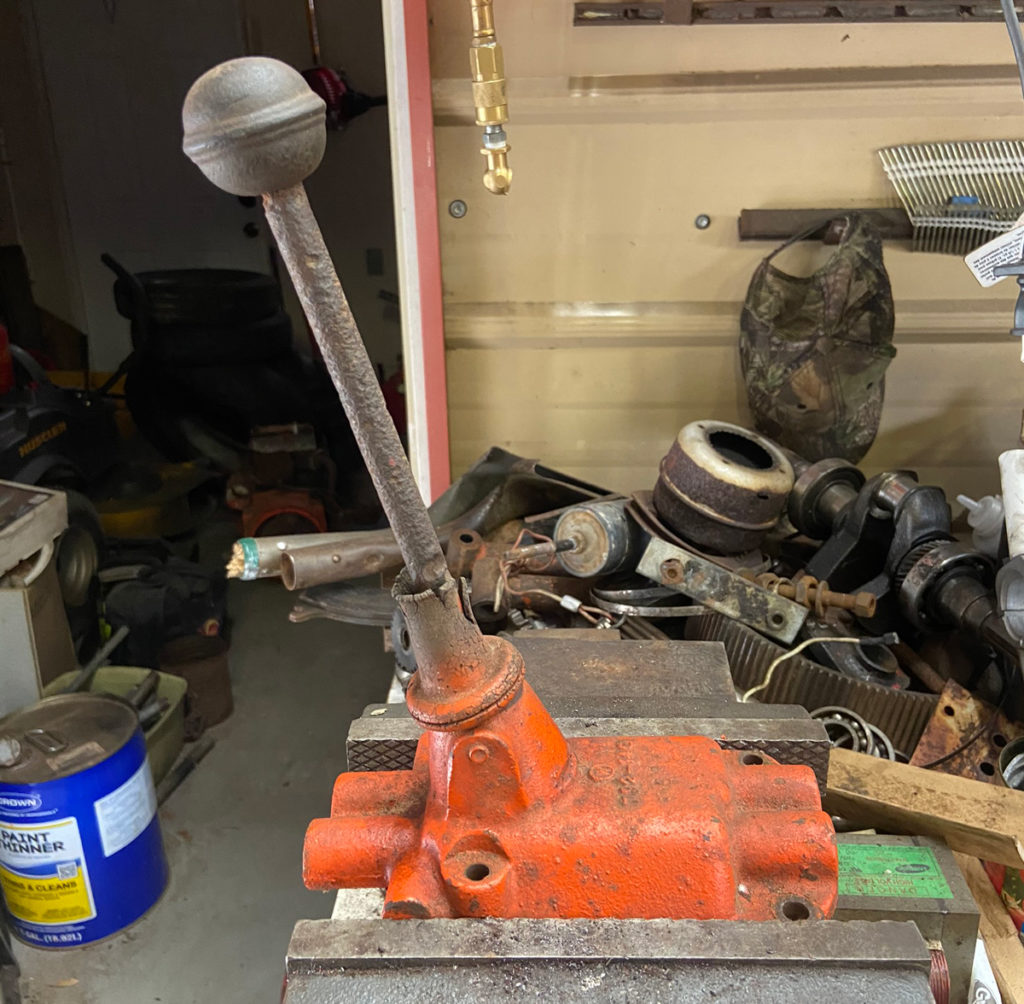
Hint: See that little pin just below the ragged rubber “boot?” Don’t try to remove it. More on that later…
The first thing to do is remove the shifter ball up top.
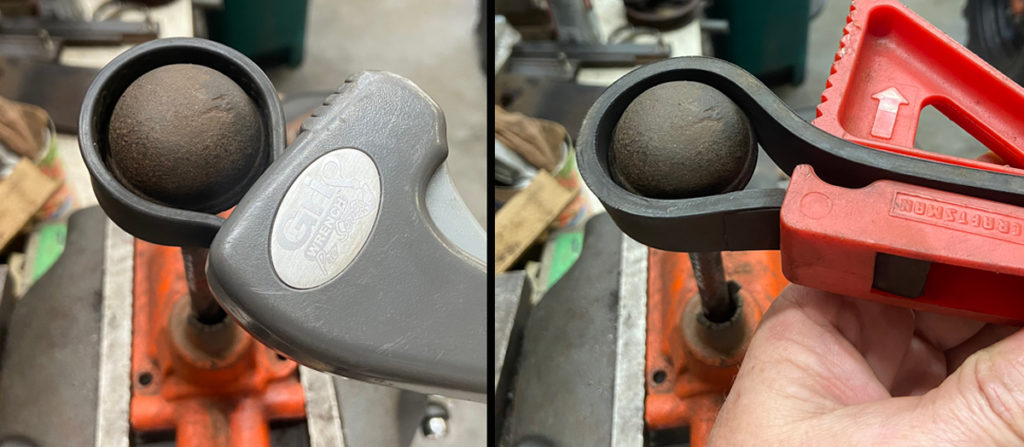
Now is the best time to remove the shifter ball, because it will get much more difficult after the shifter is taken loose from the tower. The shifter ball is threaded on and is sometimes difficult to unscrew. It has normal right-hand threads, so “lefty loosey” is your friend. I always start with a strap wrench, to prevent damage to the ball.
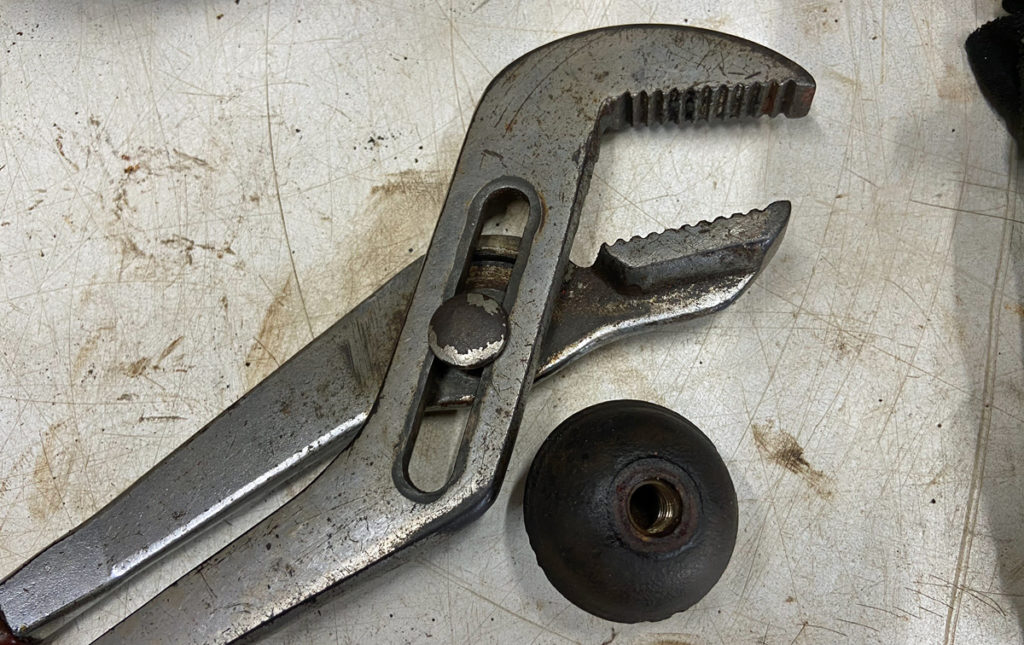
More-stubborn balls require more-aggressive tools… when you put it back on, use some anti-seize on the threads.
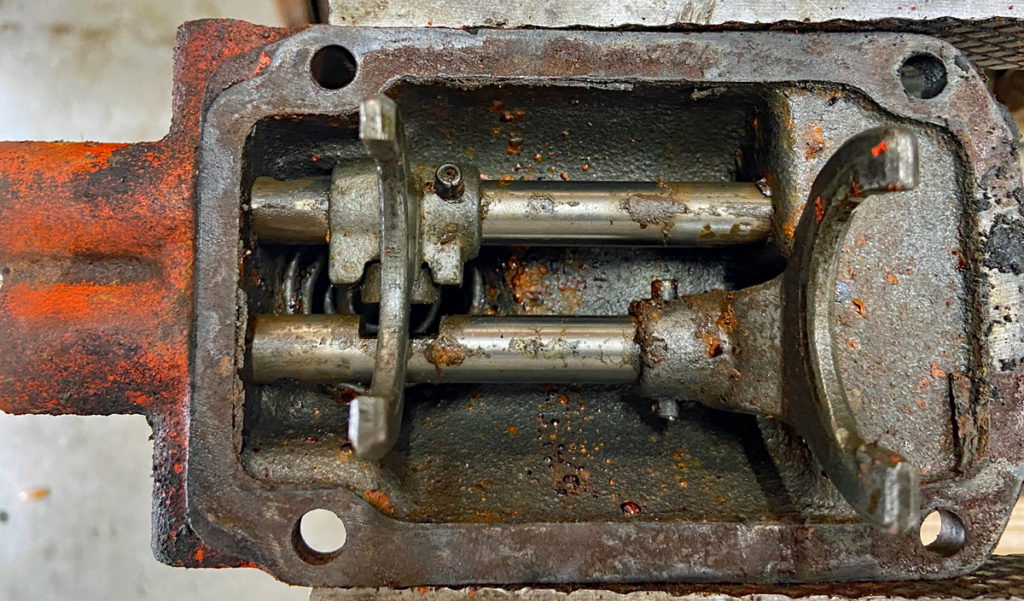
Then I like to clamp the trans top in a vise upside-down. Make sure the shifter is not in a bind and can move around a little.
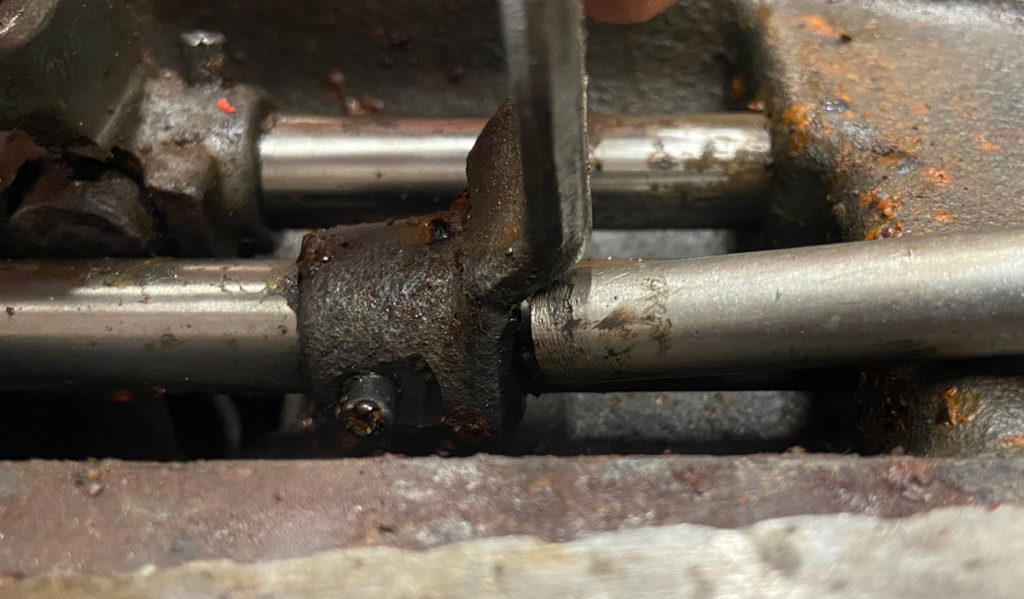
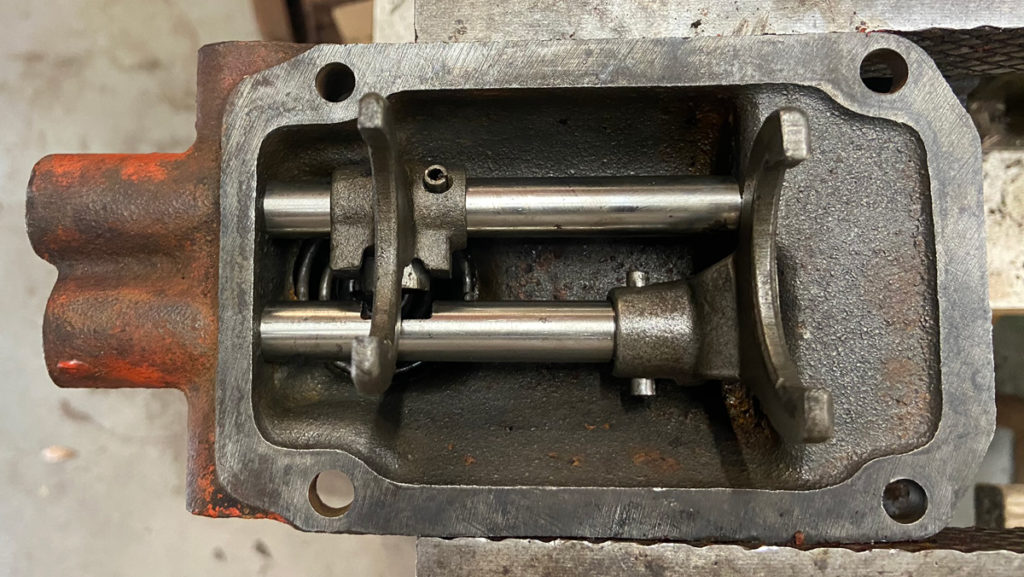
The first step is to pop out one of the welch plugs by driving the shift rail into it from the inside. I use a punch placed on the base of the shift fork. NEVER hit the fork part or you’ll break it… don’t ask me how I know.
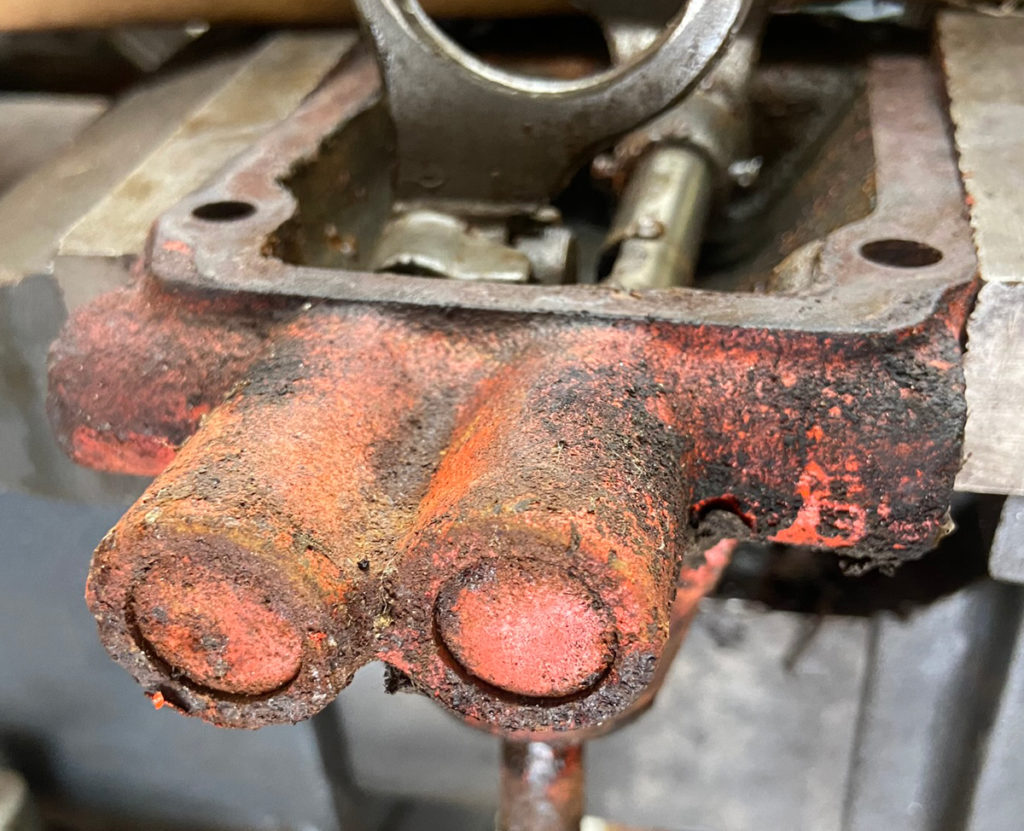
The round plug on the right in the photo above is our target. Be careful… sometimes they go flying when you pop them out.

And there’s the welch plug I just removed.
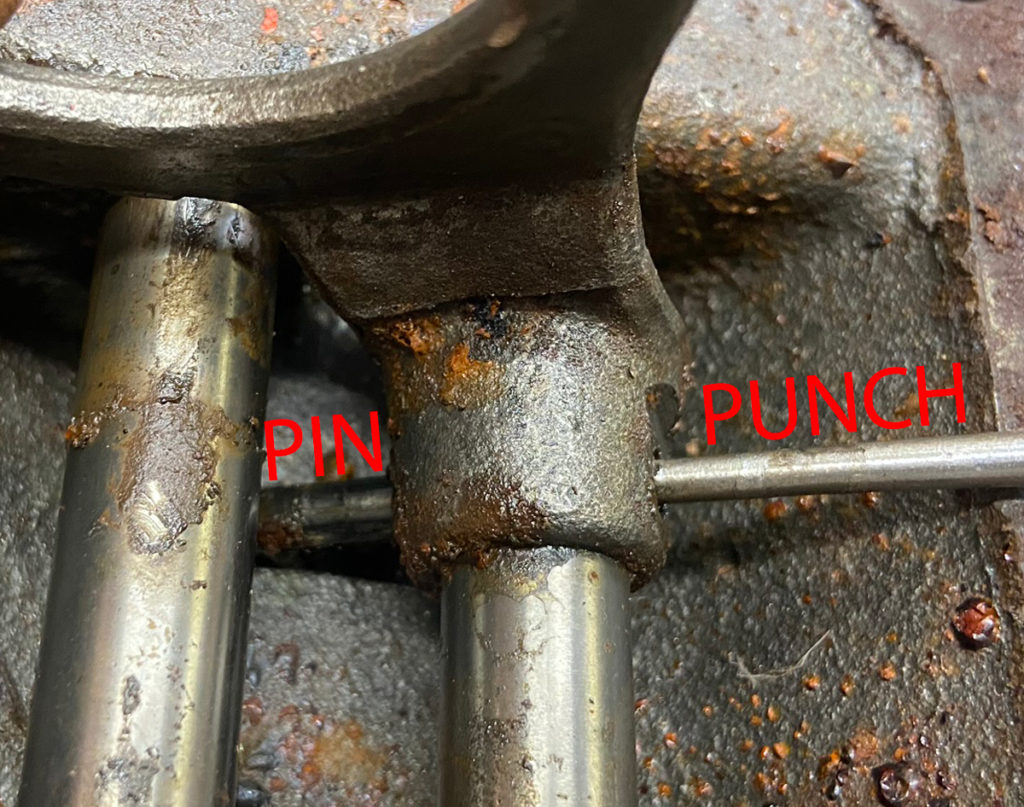
Use a punch that’s slightly smaller than the pin, to drive out the pin holding the fork to the shift rail. Make sure the shift rail is supported at each end when you do this.
Sometimes you’ll find rivets instead of roll pins — I’ve even found nuts & bolts in there — but either way the idea is the same: you need the shift rail to slide out of the fork, so the pin/rivet/bolt must be removed.
Once you do that, you can remove that shift rail entirely, or simply shove it out of your way towards the rear (meatier end) of the tower. Either way, you will have to move it past the detent assembly, so the other shift rail can move.
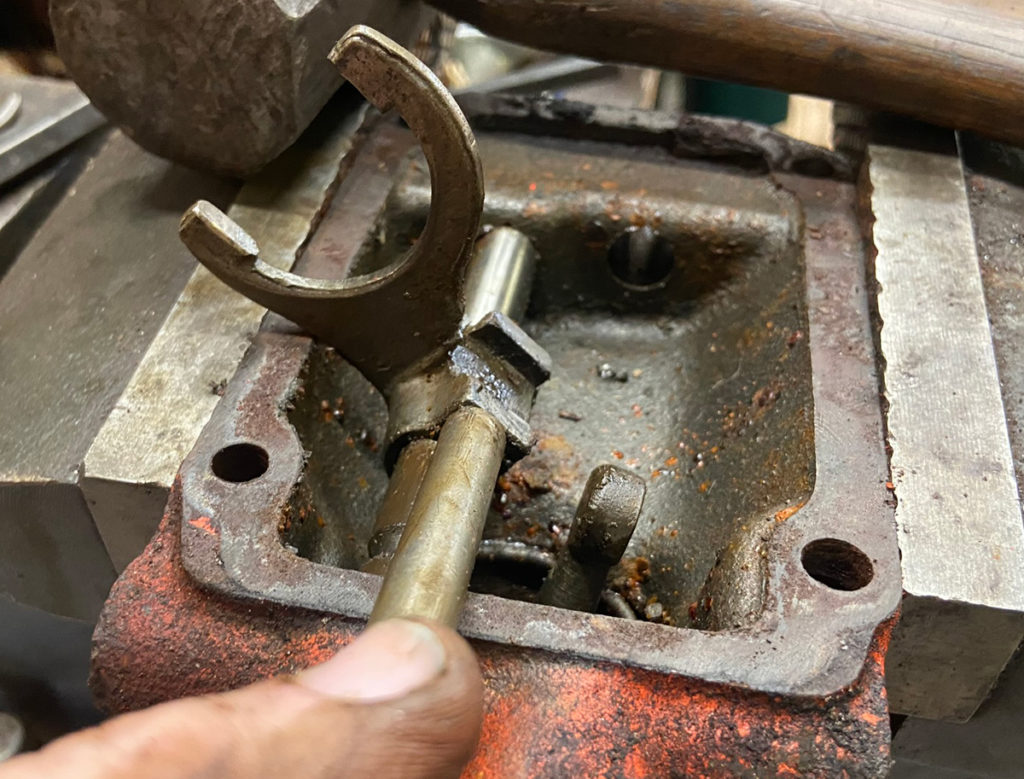
On the other rail, drive it carefully in the other direction. This will pop out a welch plug; use care to prevent it flying off into the great wide open.
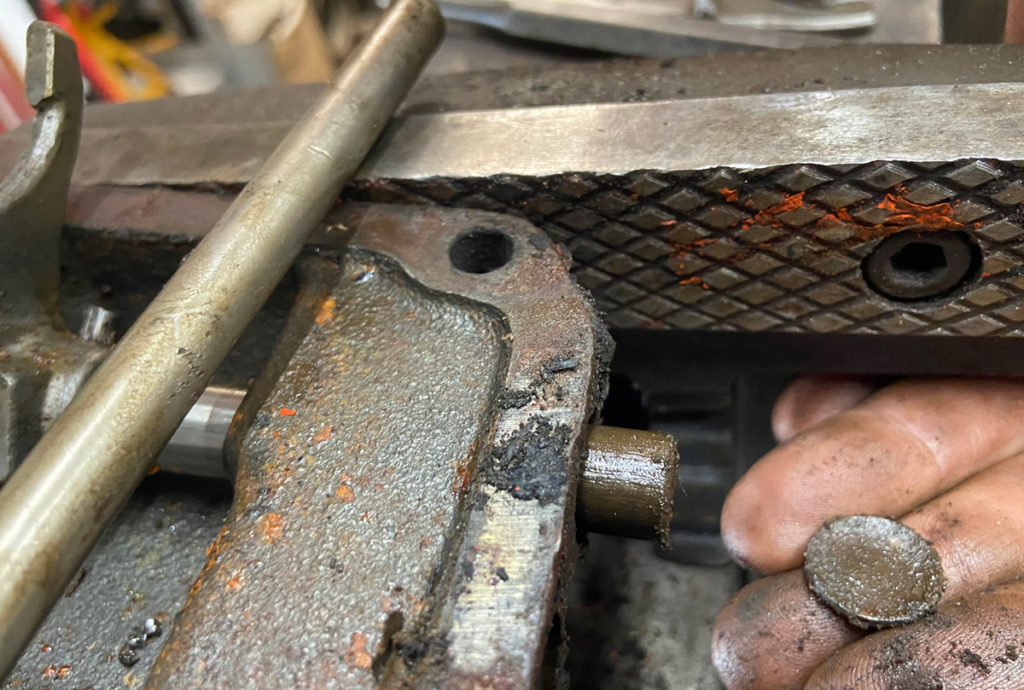
When the welch plug is out of the way, you can shove that other shift rail out of your way so you can get to the spring which secures the bottom of the shifter.
At this point, some small bits may fall out of the shift rail holes and down into the spring area… these are usually small steel balls. Don’t lose them.
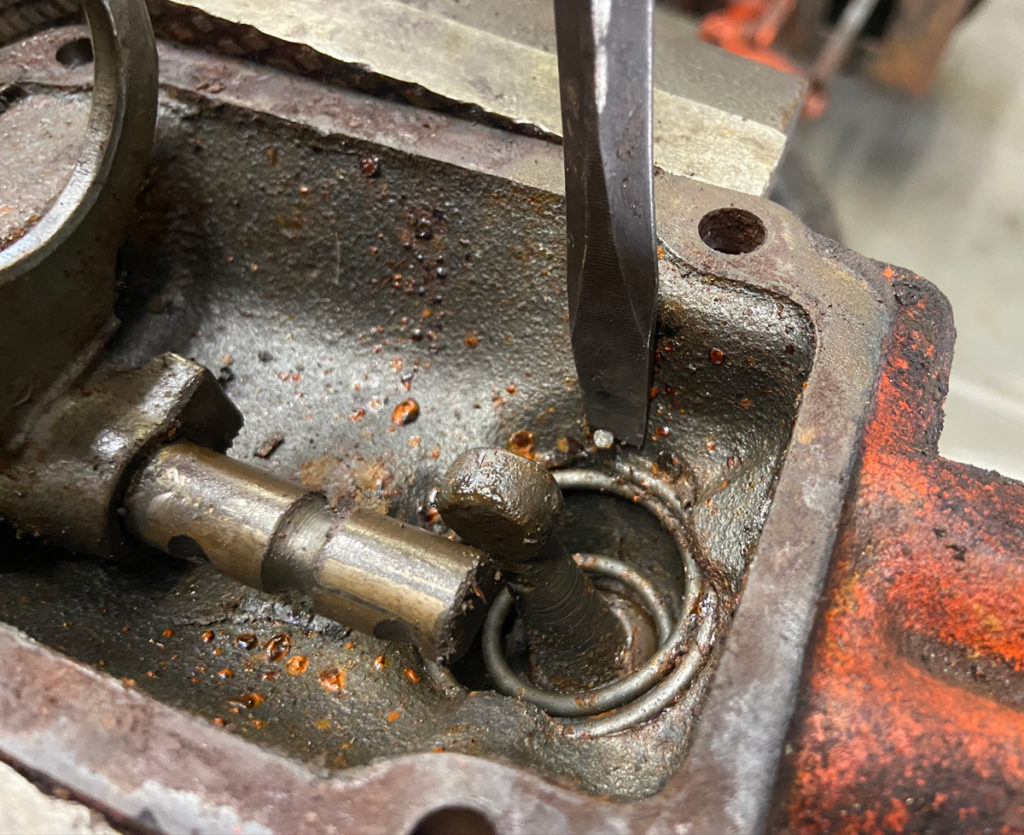
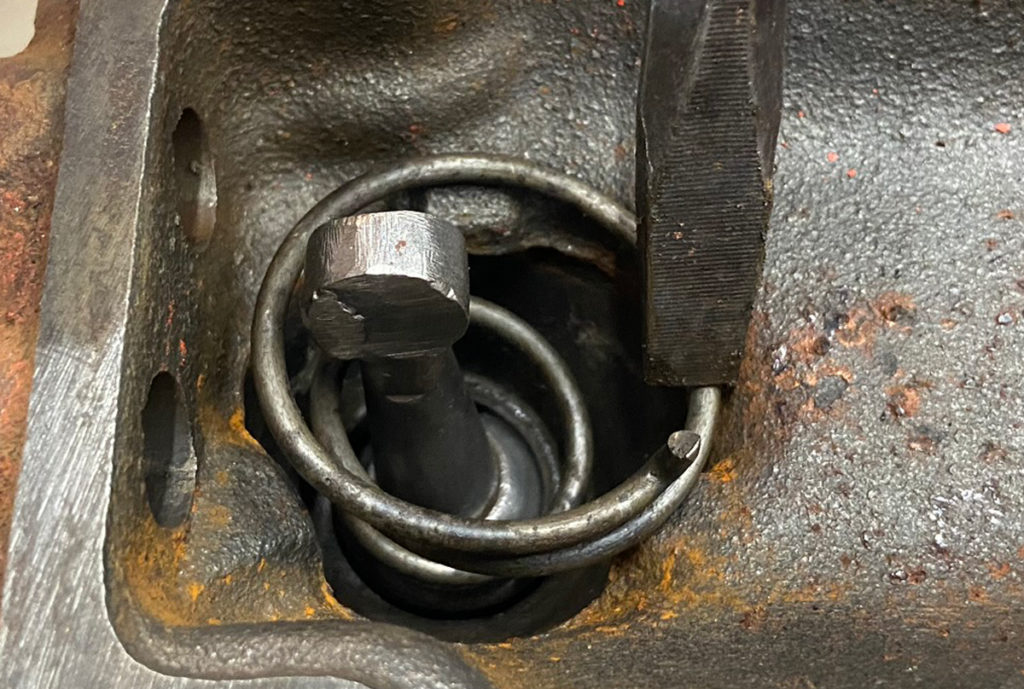
A big screwdriver does the trick to work the big spring out of your way so you can remove the shifter.
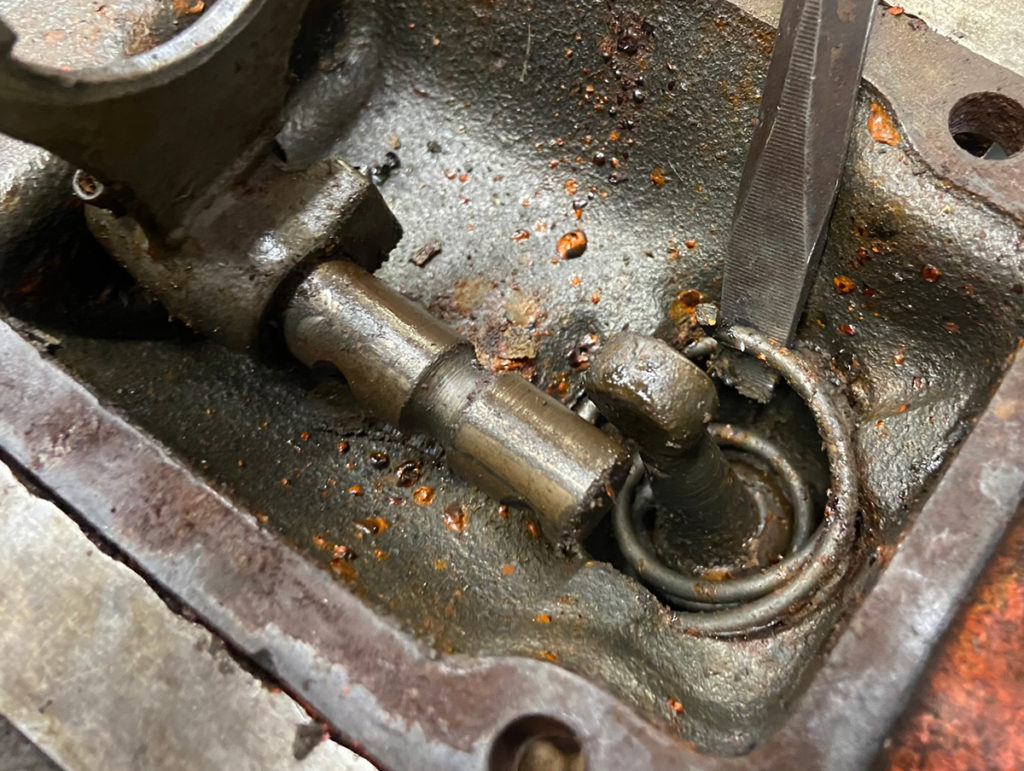
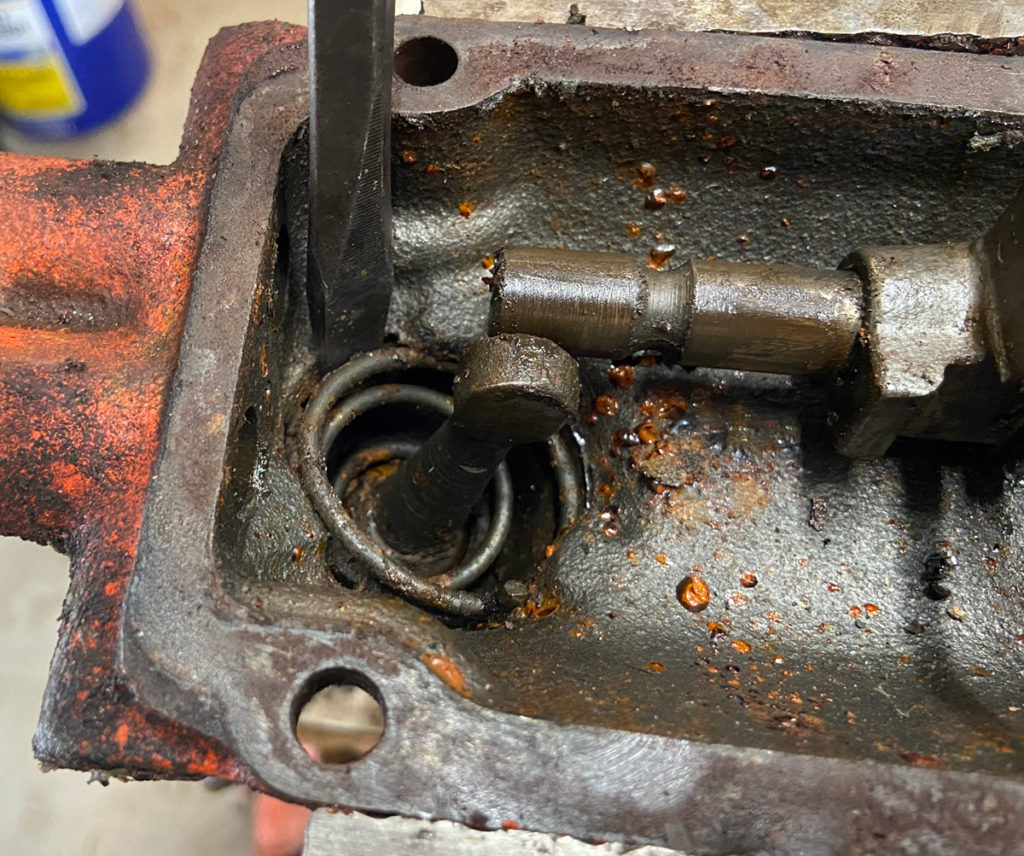
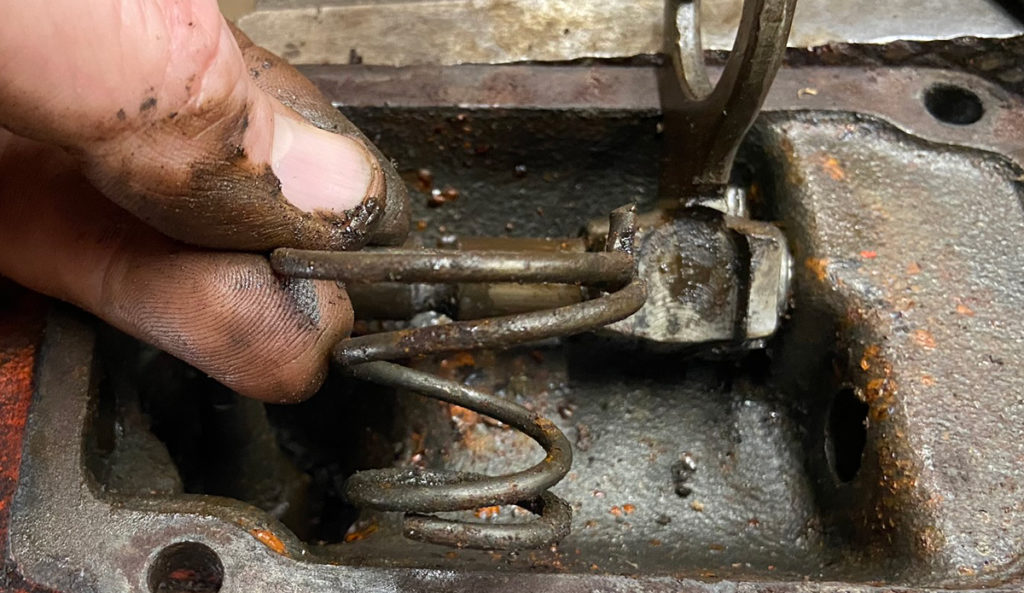
Success! Once the spring is out, the shifter just lifts right out.
I can repair your old shifter and return it to you, or you can weld & grind it back to spec yourself. If you’re interested in having me do it, feel free to contact me at pkjimdandy@gmail.com
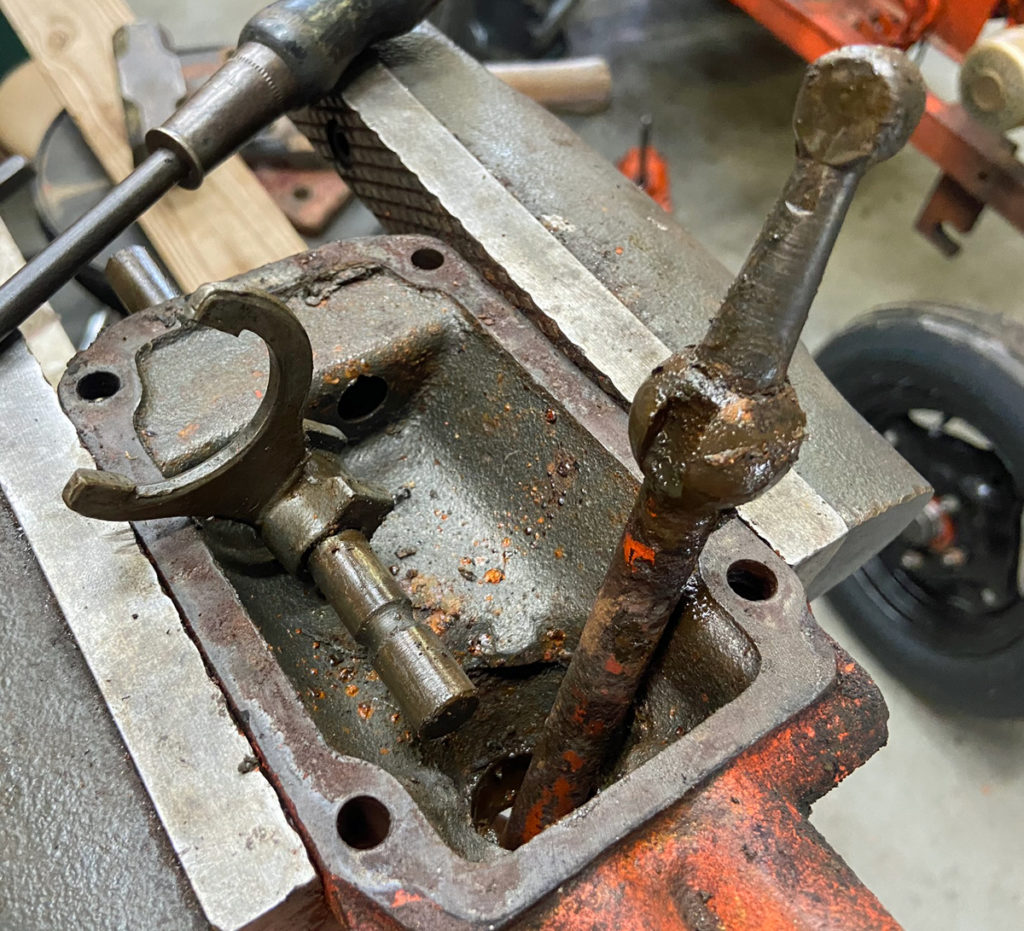
Now you can install your new or overhauled shifter. The little pin I mentioned in the first paragraph above is used to index the shifter, like so. This is how you want it to look before you install the spring.
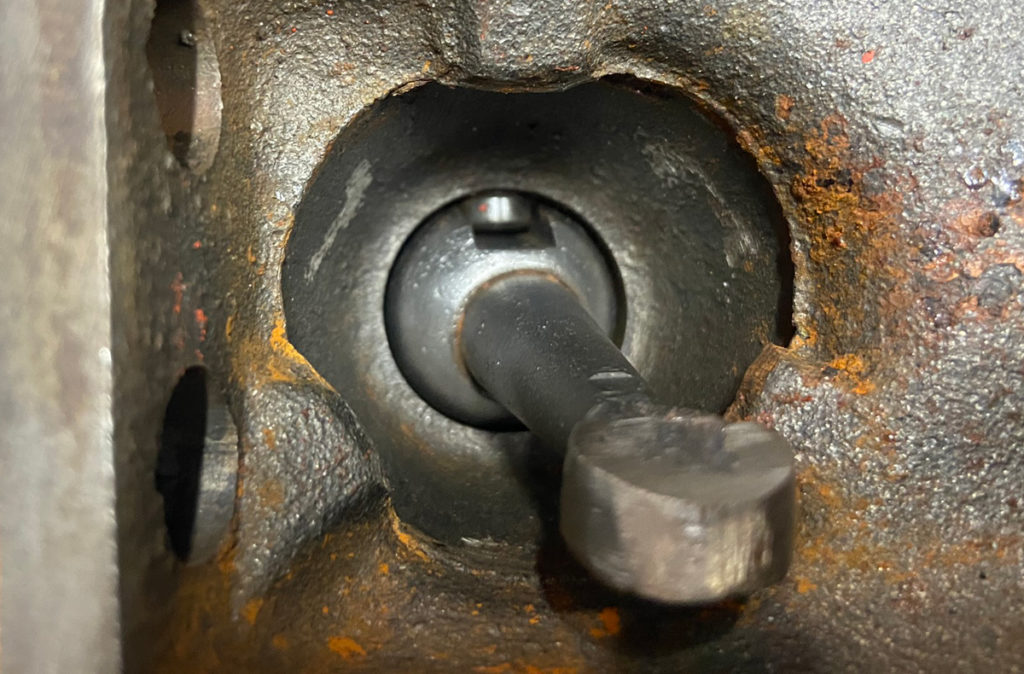
Just pop the spring under its keeper tabs by working it in a little at a time using hammer & large screwdriver.
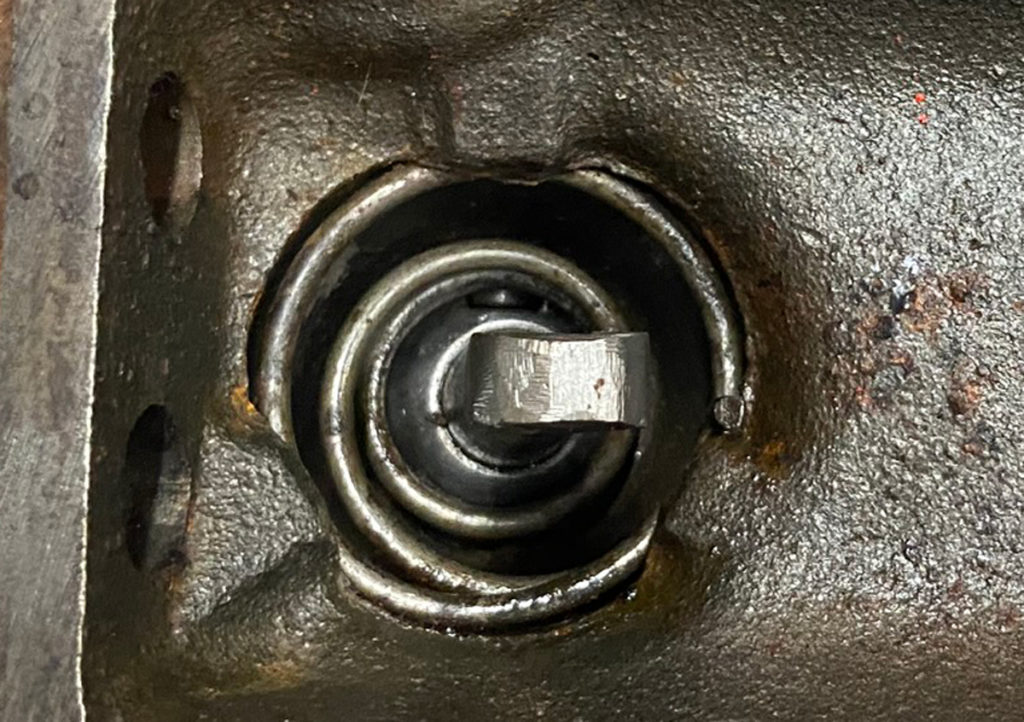
Now you can re-pin the shift fork to the rail, if you removed that pin. LIne up the holes, but don’t drive the pin until both ends of the rail are in the cast iron top so they’re supported.

Then you can drive the pin on in, ideally with the same amount sticking out on either end.
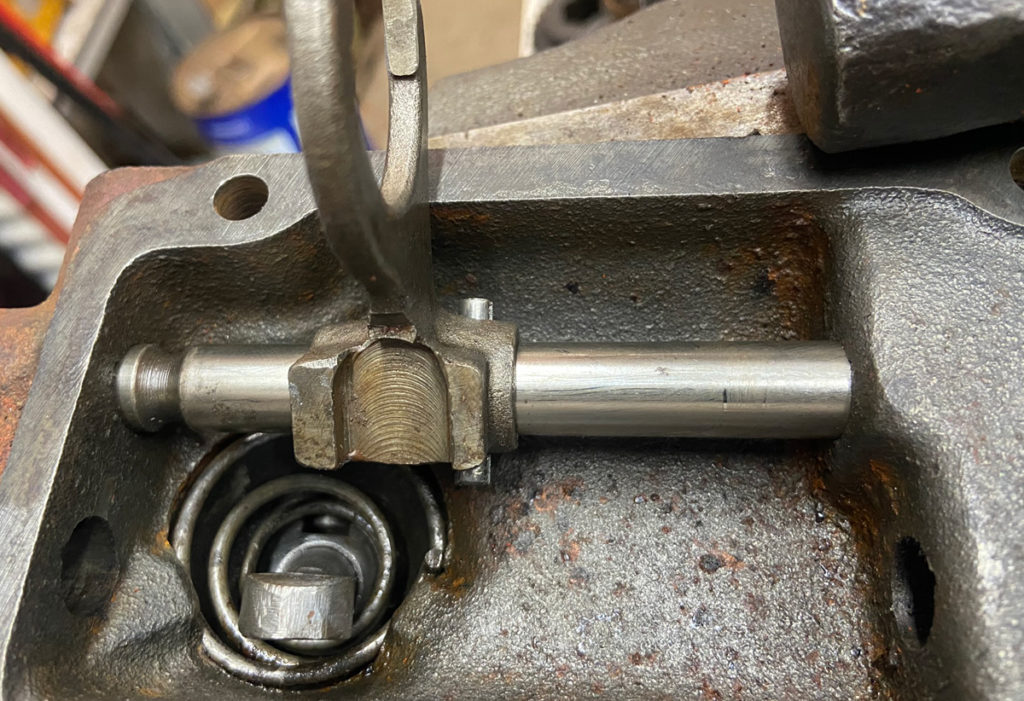
It helps to understand how the shifter detent system works. In the pic below, I set things in place but neglected to include the springs, so I drew those in with great artistry. This is how the parts are arranged inside of the “tower” when everything is assembled correctly.
This illustrates why you can only move one shift rail at a time… that center slug only lines up with the grooves on both rails when both rails are in the neutral position. At any other time, one rail is secured by the detent slug while the other rail is free to move.
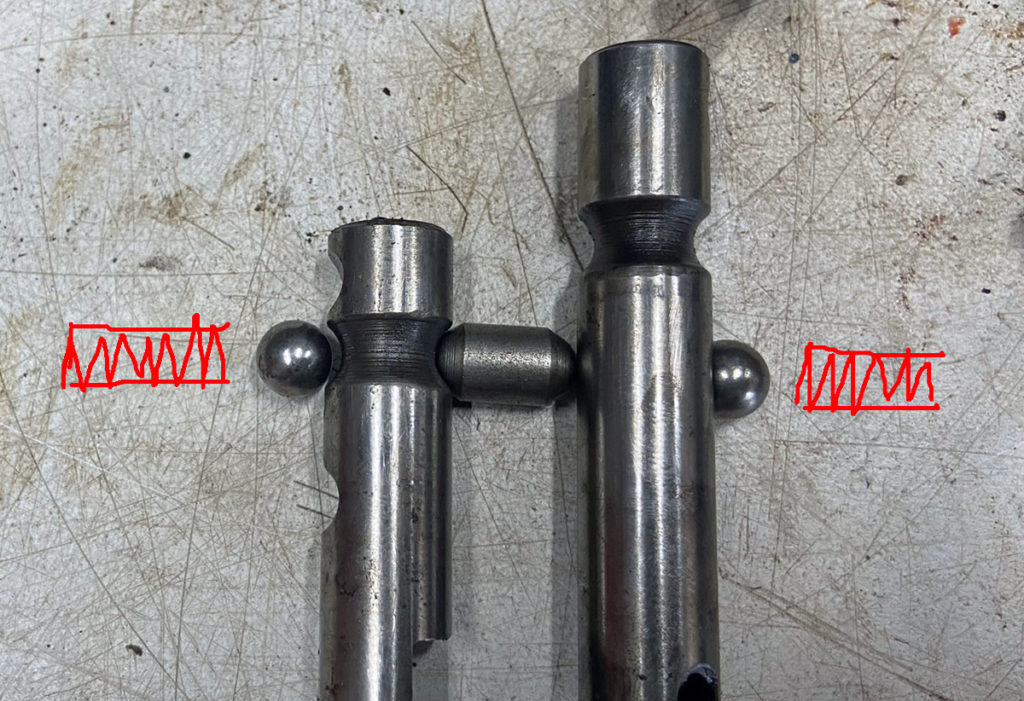
You need to get the parts in place progressively… in this case I would start by assembling the rail we just pinned the fork to (the right side in the photo below)… so I’d make sure the slug was out of the way as it is in the pic below, and the right ball in place over the spring. Then you can shove the right rail in there — making sure the ball stays in that hole with spring tension pushing against the rail.
What sometimes goes wrong here is the ball will come out and get ahead of the rail… then it’s time to back up, retrieve the ball, and try again.
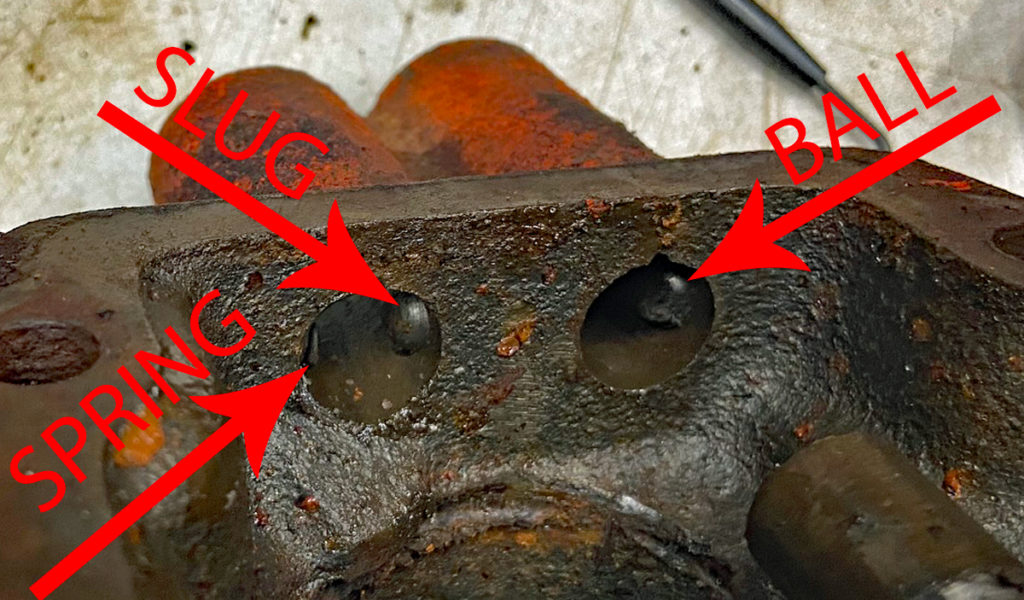
Next, move the newly-installed rail into the neutral position. You will know it because the ball will pop into the groove on the shift rail.
Use a little screwdriver to push the slug (indicated by arrow) off to the side, and make sure the spring & ball are in the hole opposite the slug. Place the end of the shifter into its notch in the shift fork, as in the photo below.
Inserting the rail from the outside of the tower, I use a small screwdriver to hold the ball back against its spring while I shove the rail in.
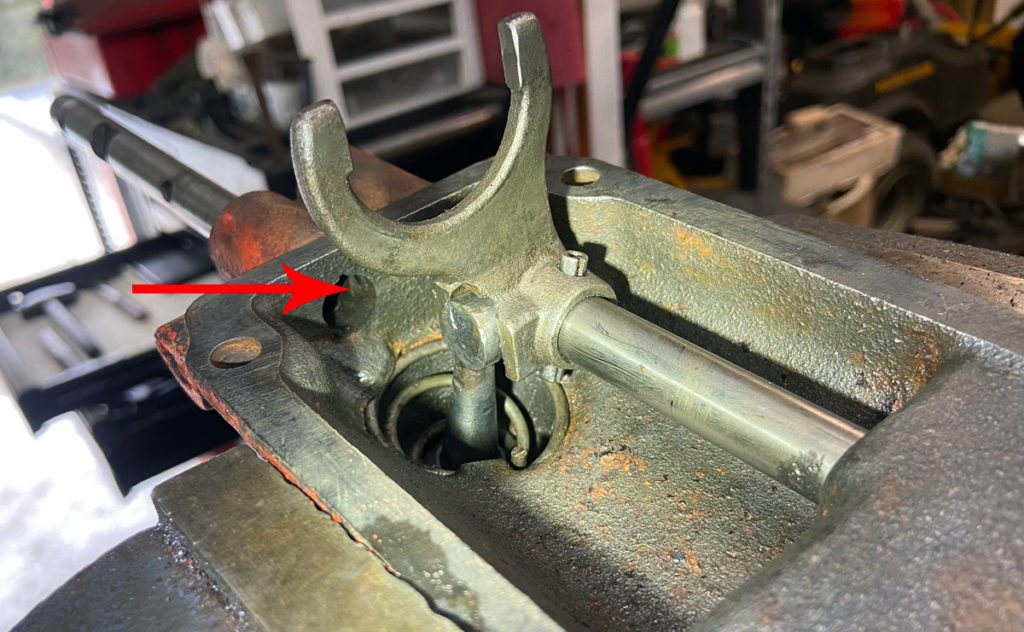
As you push the rail on in, it needs to go through the fork… make sure you don’t get the fork backwards. It should look like the pic below.

Align the holes in fork & rail, and drive in your roll pin.
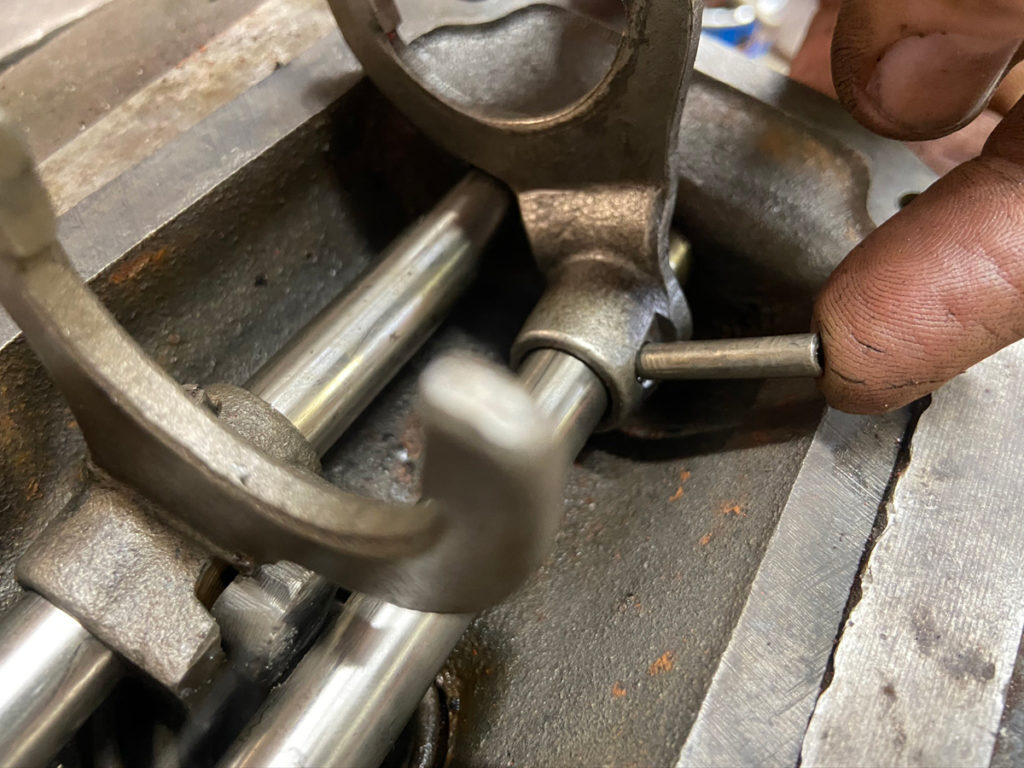
Nice work! All done but the welch plugs. You can use new ones, but I usually clean up & re-form old ones so I can reuse them.
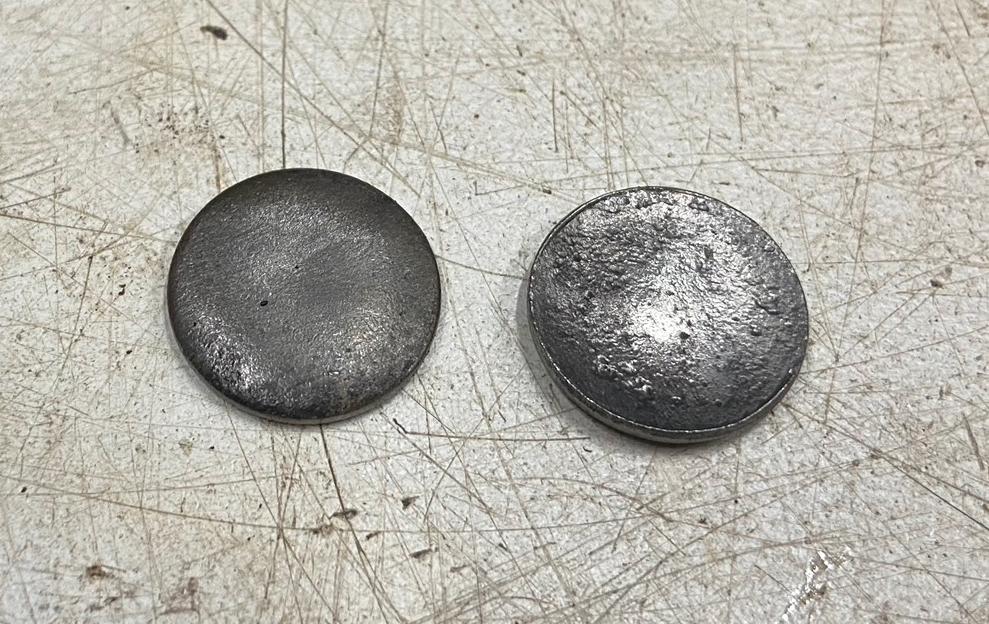
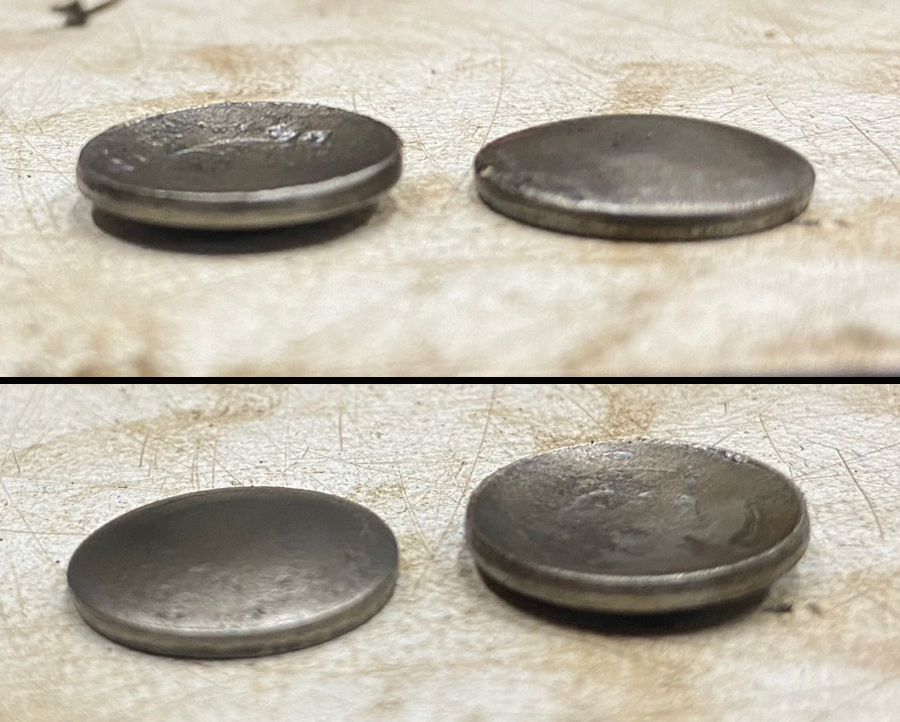
When new, a welch plug is a small disk that’s been formed into a shallow dome. When it’s put in place, a punch against the dome expands it to fit its hole. So after removing these plugs, they must be re-domed. The two below are used and have been somewhat flattened by a punch. The left one is right-side-up and the right one is upside-down.
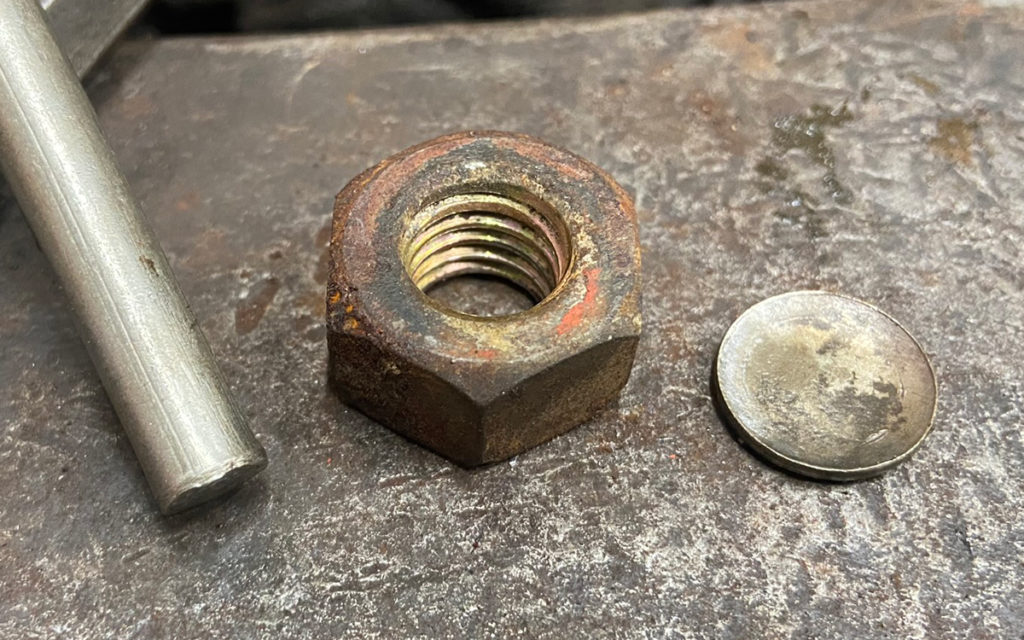
These are the only tools you really need… anything to support the outer edges of the welch plug (a nut in this case) and a steel punch.
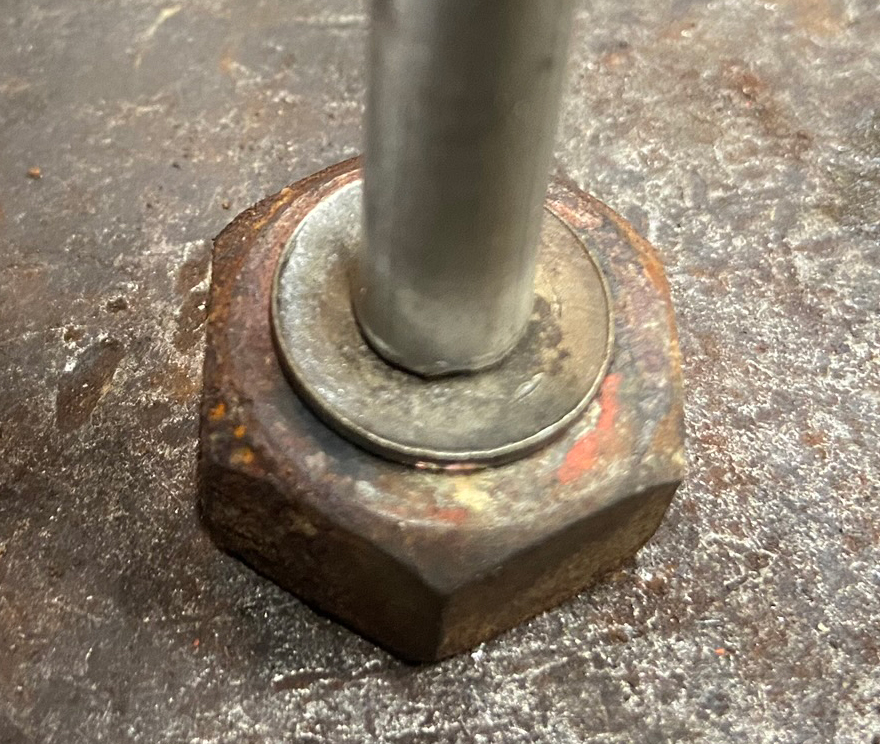
Place the plug upside-down on the nut (or whatever), and smack the punch with a hammer.
The two plugs below are nice and clean, re-shaped and ready to be used again.
Make sure the hole is nice and clean, then insert the welch plug with the dome towards the outside.

Place a punch against the center of the dome and give it a swat to flatten/expand the plug.
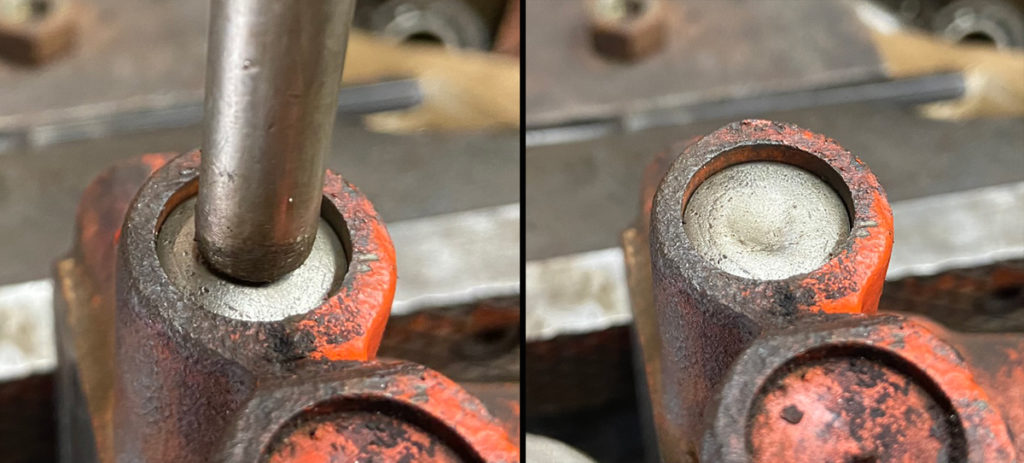
You’re done! Nice work. Tell your friends. 🙂